[BBB-Linux] 3.1 Why do we need a Device Tree?
Translated from the Vietnamese original; wording may still be rough. Read the original →
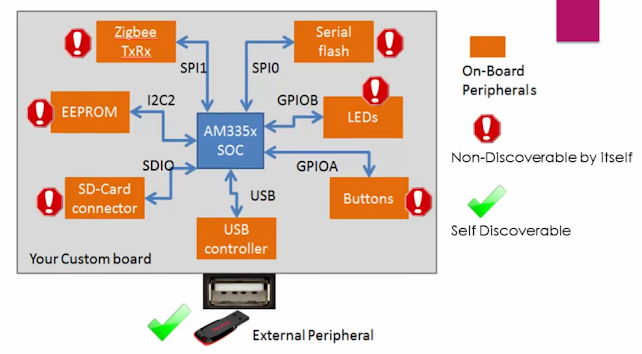
A board has many peripherals, but once the OS is running it cannot discover the on-board peripherals by itself, except USB (which has a self-discovery mechanism). That is why we need a code file that defines the peripherals on the board.
1. Hard-coding peripherals in a file
The first way to define peripherals is to have, say, a board.c file. However, different boards have different peripherals even when they use the same SoC.
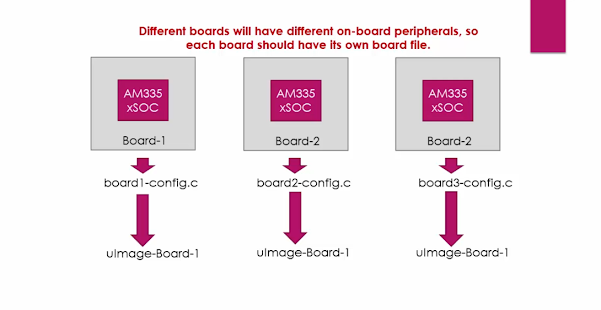
So even with the same SoC, each board had to compile its own kernel matching the peripherals on that board. Compiling took a long time and there was no consistency.
The Linux community wanted to keep the Linux kernel independent.
--> ARM proposed the Device Tree (Flattened Device Tree)
2. Benefits of the Device Tree
- Easy to move between platforms: the Device Tree helps developers move applications and operating systems to different hardware architectures conveniently.
- Separates hardware and software: instead of encoding hardware information directly into the kernel, the Device Tree describes the hardware flexibly, reducing the dependence on a fixed configuration.
- Saves effort and time: developing and maintaining a system across many devices becomes simpler, which shortens the work and improves efficiency.
3. Device tree structure, illustrated
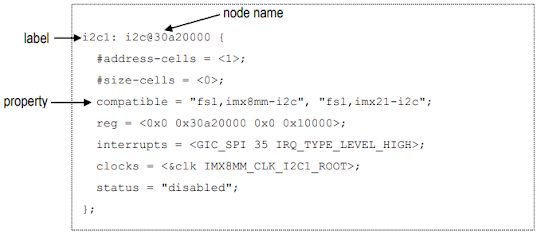
- i2c1: label
- i2c@30a20000: node name and unit
- compatible:
- Specifies the driver name the kernel will use to match the device.
- The kernel looks for a driver in the order of the strings in this list.
- reg: describes the hardware address range used by the device
- 0x30a20000 is the start address.
- 0x10000 is the size of the region (64 KB).
- These values are split according to #address-cells and #size-cells.
- interrupts: describes the IRQ line used by the device.
\
- GIC_SPI: interrupt type from the GIC (Generic Interrupt Controller). 35: IRQ number.
- IRQ_TYPE_LEVEL_HIGH: interrupt trigger type (level high).
- clocks: specifies the clock source feeding the device.
- &clk: reference to the clock node.
- IMX8MM_CLK_I2C1_ROOT: the specific clock name.
- status: device status "okay"/"disabled"
4. Device Tree Load
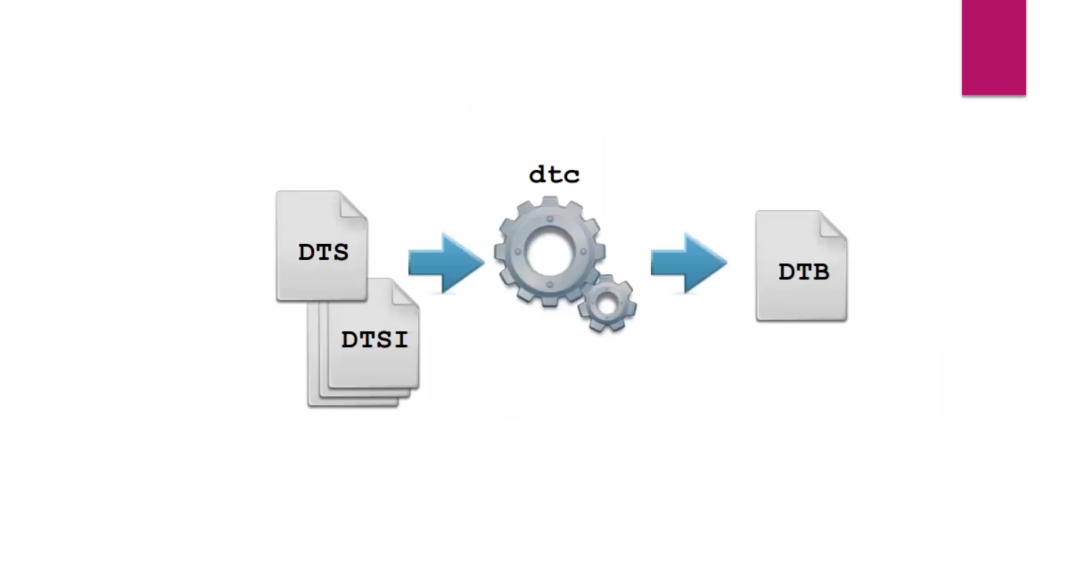
The DTS (Device Tree Source) together with DTSI (Device Tree Source Include) goes through the device tree compiler to become the DTB (Device Tree Blob/Binary).
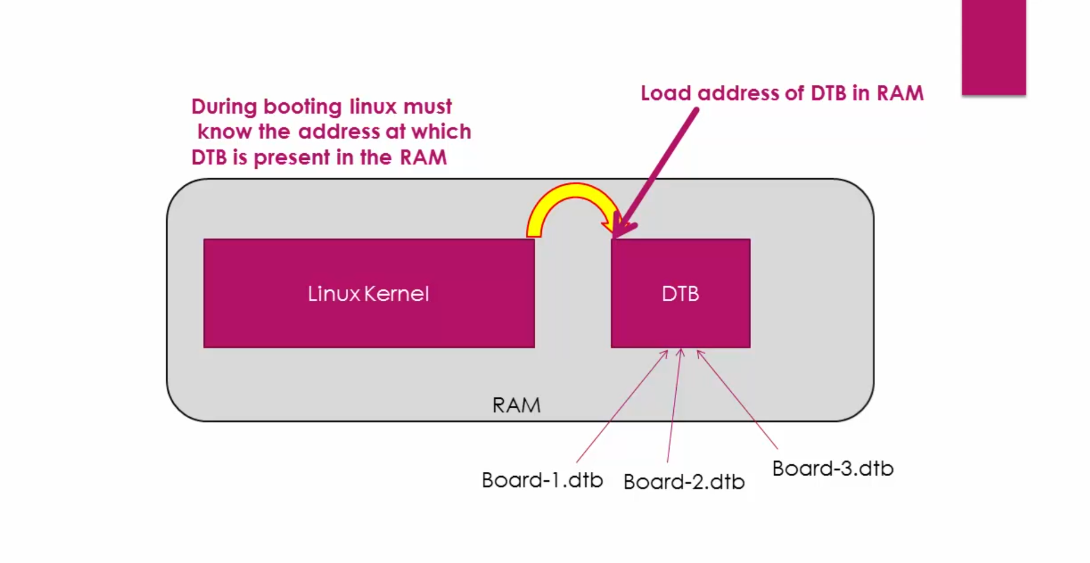
And since U-boot passes the boot parameters, the kernel knows the address in RAM where the DTB was loaded.